
CGM vs. Finger-Prick Testing: Which Is Right for You?
CGM vs. Finger-Prick Testing: Which Is Right for You?
Monitoring your blood glucose is one of the most important parts of diabetes management. Whether you have Type 1 Diabetes, Type 2 Diabetes, or prediabetes, regularly checking your glucose helps you and your doctor understand how well your treatment is working.
Today, there are two main ways to monitor glucose levels—traditional finger-prick testing using a glucometer and Continuous Glucose Monitoring (CGM). Both methods have their advantages, and the best choice depends on your diabetes type, treatment plan, lifestyle, and budget.
As an Endocrinologist, Dr.Basavaraj G S believes that choosing the right glucose monitoring method can help patients achieve better diabetes control, reduce complications, and make informed day-to-day decisions.
What Is Finger-Prick Blood Glucose Testing?
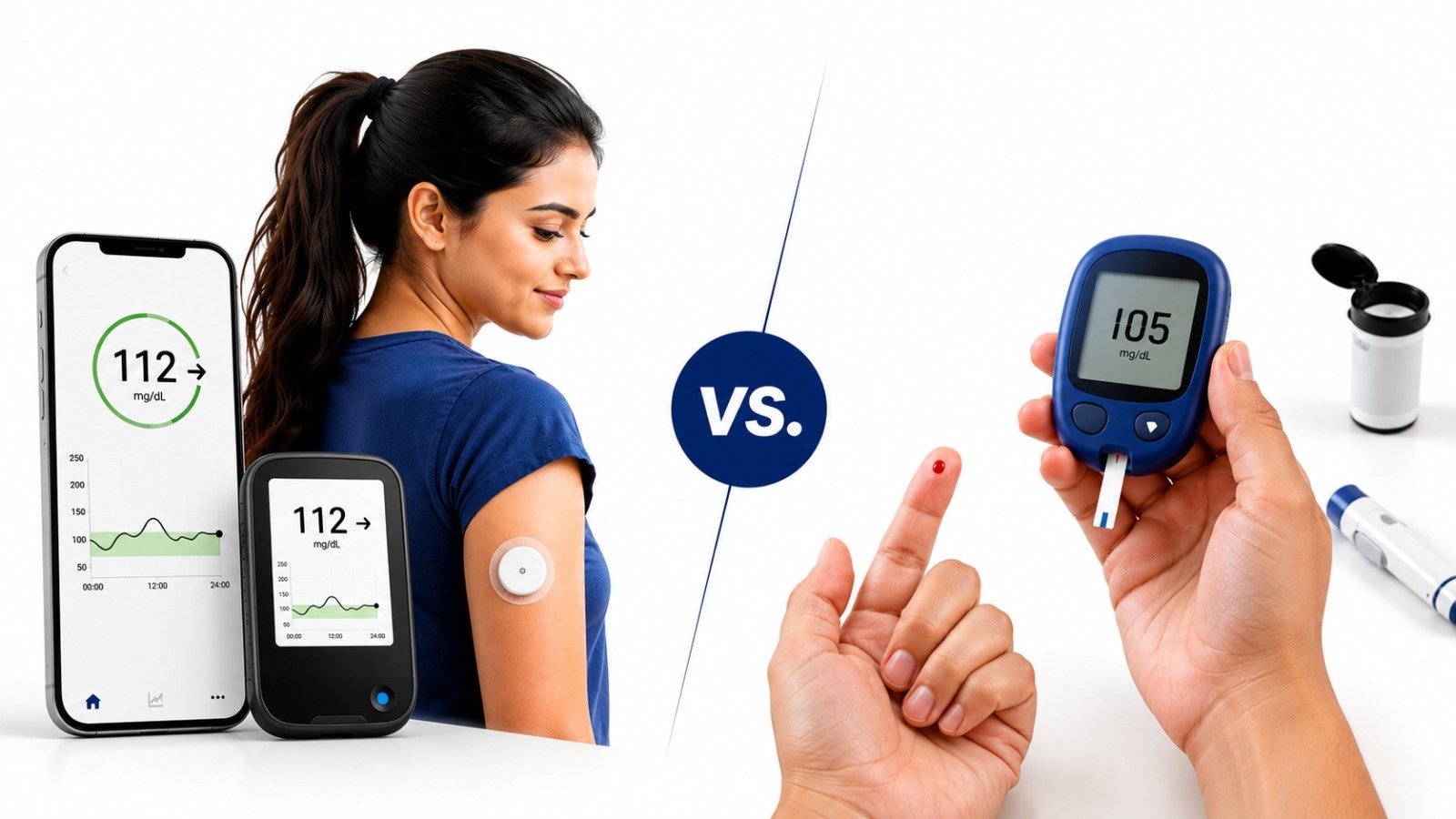
Finger-prick testing uses a small lancet to obtain a drop of blood from your fingertip. The blood is placed on a test strip inserted into a glucometer, which provides a blood glucose reading within seconds.
Each reading represents your glucose level at that specific moment. It is similar to taking a photograph—it provides useful information but does not show what happened before or what may happen next.
What Is Continuous Glucose Monitoring (CGM)?
A Continuous Glucose Monitoring (CGM) system uses a tiny sensor placed just beneath the skin, usually on the upper arm or abdomen. Instead of measuring glucose directly from blood, it measures glucose in the interstitial fluid surrounding your body's cells.
The sensor automatically records glucose levels every few minutes and sends the information to a smartphone or receiver. This allows you to view:
- Current glucose level
- Trend arrows showing whether glucose is rising or falling
- Daily glucose patterns
- Time spent within the target glucose range
- Alerts for high and low glucose levels
Rather than a single snapshot, CGM provides a complete picture of your glucose throughout the day and night.
Why Do CGM and Finger-Prick Readings Differ?
Many people notice that their CGM reading does not always exactly match their glucometer reading. This is completely normal.
Finger-prick testing measures glucose directly from the bloodstream, while CGM measures glucose in the fluid surrounding body cells. Because glucose takes time to move from the bloodstream into this fluid, CGM readings usually have a lag time of about 10–15 minutes.
This difference becomes more noticeable after meals, during exercise, or after insulin, when blood glucose changes rapidly.
Accuracy of Both Methods
Both glucose monitoring methods are reliable when used correctly.
- Finger-prick glucometers generally measure within approximately ±15% of laboratory glucose values.
- Modern CGM systems are highly accurate and generally perform within approximately ±20% of laboratory measurements, with newer sensors becoming even more precise.
- When glucose levels are stable, both methods usually provide very similar readings.
- When glucose changes rapidly, CGM readings may briefly lag behind blood glucose values.
If you have symptoms of low blood sugar but your CGM does not show a low value, healthcare professionals often recommend confirming the result with a finger-prick test before taking corrective action.
Advantages and Limitations
Finger-Prick Testing
Advantages
- Affordable and widely available.
- Simple to perform.
- Measures blood glucose directly.
- Useful for confirming unusually high or low readings.
- Suitable for occasional glucose monitoring.
Limitations
- Provides only a single glucose reading.
- Cannot identify overnight highs or lows.
- Frequent testing may cause sore fingertips.
- No information about glucose trends.
Continuous Glucose Monitoring (CGM)
Advantages
- Continuous glucose readings every 1–5 minutes.
- Trend arrows showing rising or falling glucose.
- Alerts for high and low glucose levels.
- Detects overnight and exercise-related glucose changes.
- Shows how meals, exercise, stress, illness, and medications affect glucose.
- Often improves HbA1c and Time in Range when used consistently.
Limitations
- More expensive than glucometers.
- Requires wearing a sensor continuously.
- Occasional skin irritation may occur.
- Sensor readings may occasionally be affected by dehydration, pressure, or certain medications.
Who Should Choose Finger-Prick Testing?
Finger-prick monitoring may be sufficient if:
- You have stable Type 2 Diabetes.
- You are not taking multiple daily insulin injections.
- Your doctor recommends occasional glucose monitoring.
- Cost is an important consideration.
- You only need periodic glucose checks.
Who Benefits Most from CGM?
Continuous Glucose Monitoring is especially valuable for:
- People with Type 1 Diabetes.
- Patients taking multiple daily insulin injections.
- Insulin pump users.
- Individuals with frequent hypoglycaemia.
- People who do not recognize symptoms of low blood sugar.
- Women with diabetes during pregnancy.
- People wanting tighter glucose control and better HbA1c.
- Anyone experiencing large glucose fluctuations.
Can You Use Both Together?
Absolutely. In fact, many endocrinologists recommend combining both methods.
A practical approach is:
- Use CGM to understand daily glucose patterns and receive alerts.
- Use finger-prick testing to confirm unexpected readings or when symptoms do not match the CGM display.
- Review CGM reports with your doctor to adjust medications, meals, and physical activity.
Using both methods together often provides the safest and most comprehensive understanding of your glucose control.
Cost and Availability in India
Traditional glucometers and testing strips remain the most affordable and widely available option across India.
CGM systems are becoming increasingly popular and accessible, but they remain more expensive. Insurance coverage varies, and not all plans reimburse CGM costs.
For many people, using CGM for a few weeks or months to understand glucose patterns, followed by routine finger-prick monitoring, offers an effective balance between clinical benefit and affordability.
The Bottom Line
Both finger-prick testing and Continuous Glucose Monitoring are valuable tools for diabetes care. Finger-prick testing remains a reliable, affordable option for people who require occasional monitoring, while CGM provides continuous insights that help optimize glucose control and reduce the risk of complications.
According to Dr. Basavaraj G S, Endocrinologist, the ideal monitoring method depends on your type of diabetes, treatment plan, risk of hypoglycaemia, lifestyle, and financial considerations. A discussion with your endocrinologist can help determine the approach that best supports your long-term health.
The goal is not simply to measure glucose—it is to understand it, manage it effectively, and live a healthier life with confidence.
Need Expert Endocrine Care?
Book a consultation with our specialist endocrinologists at Shashi Advanced Health Clinics, Bangalore.
Book Appointment on WhatsApp